Mode : in-depth
-
Models in Economics and Sociology: A Conceptual Toolbox
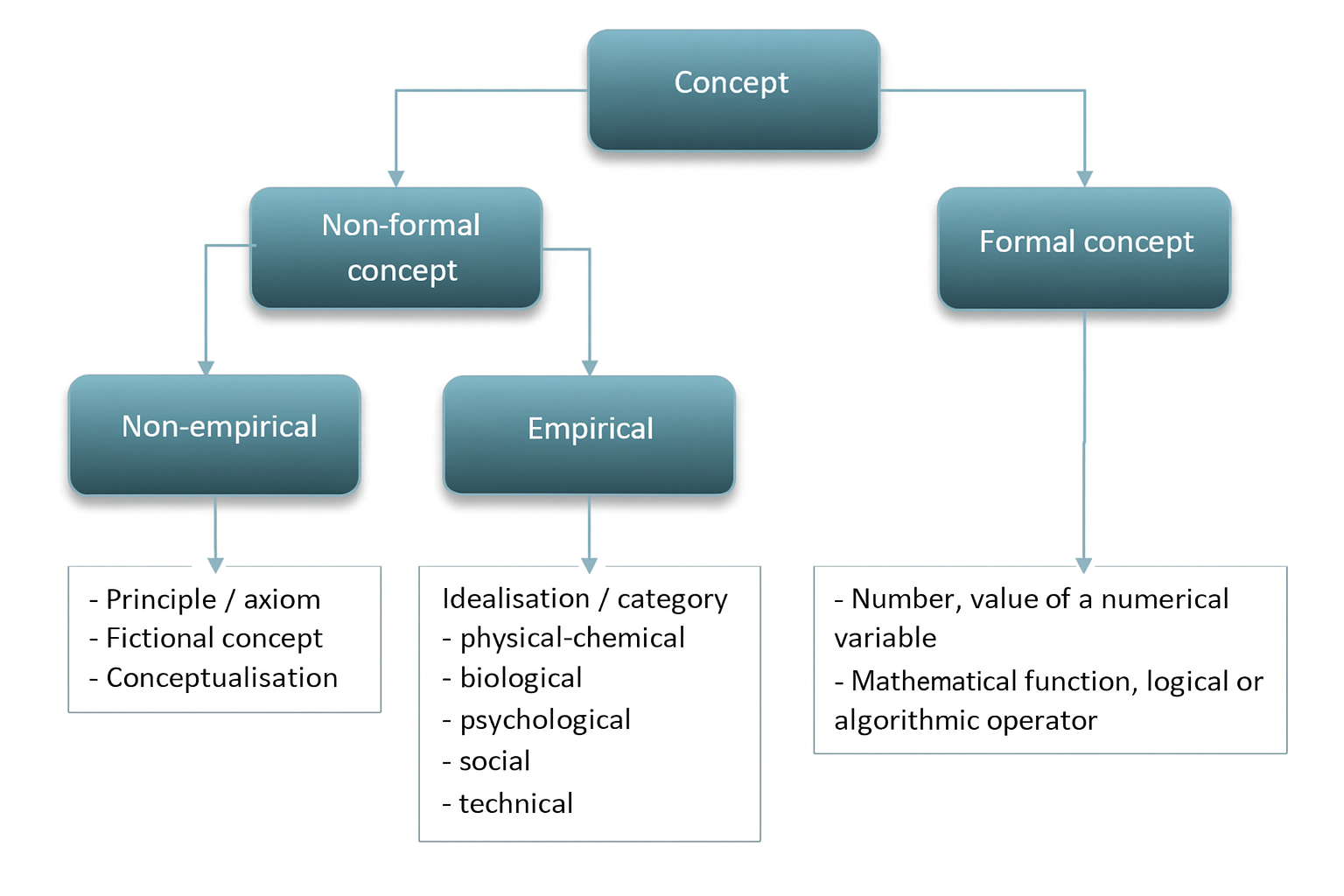
Drawing on earlier work that has examined scientific models in a historical perspective,1 with particular attention to physics, this article turns to models in economics and sociology. In this perspective, the aim is less to offer an exhaustive typology of models than to sketch out a general interpretative framework – a conceptual toolbox – for…
-
Utility, Work, Distribution: a New Grammar of the Social (19th Century)
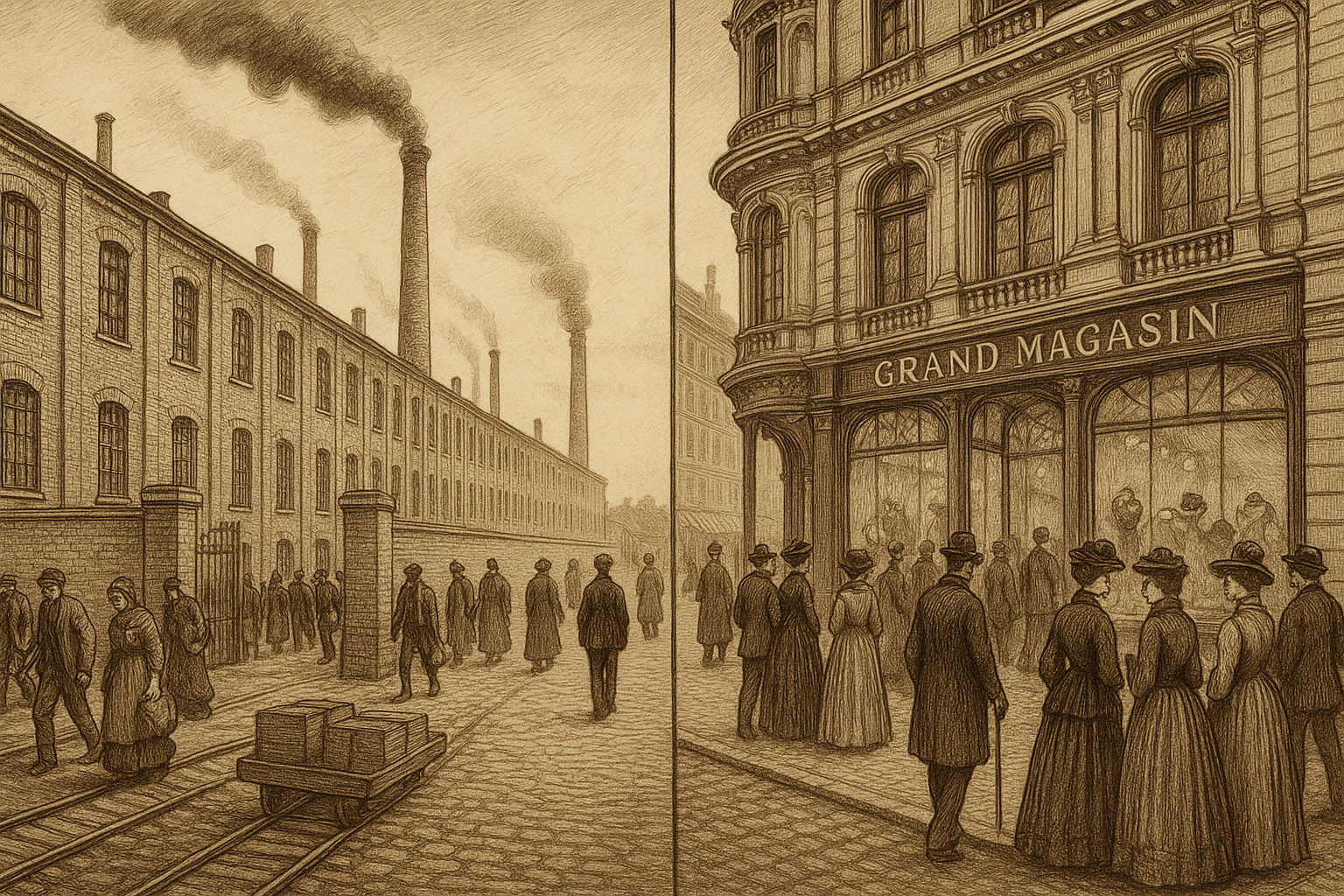
At the Origins of the Valorisation of the Economy (15th–19th Centuries) – Article 5/5 During the eighteenth century, Great Britain conferred an unprecedented status on the economy. The development of credit and investment projects, the gradual emergence of a manufacturing industry and a consumer society, the expansion of an increasingly integrated domestic and colonial market—all…
-
Interests as the driving forces of social recomposition in eighteenth-century Great Britain
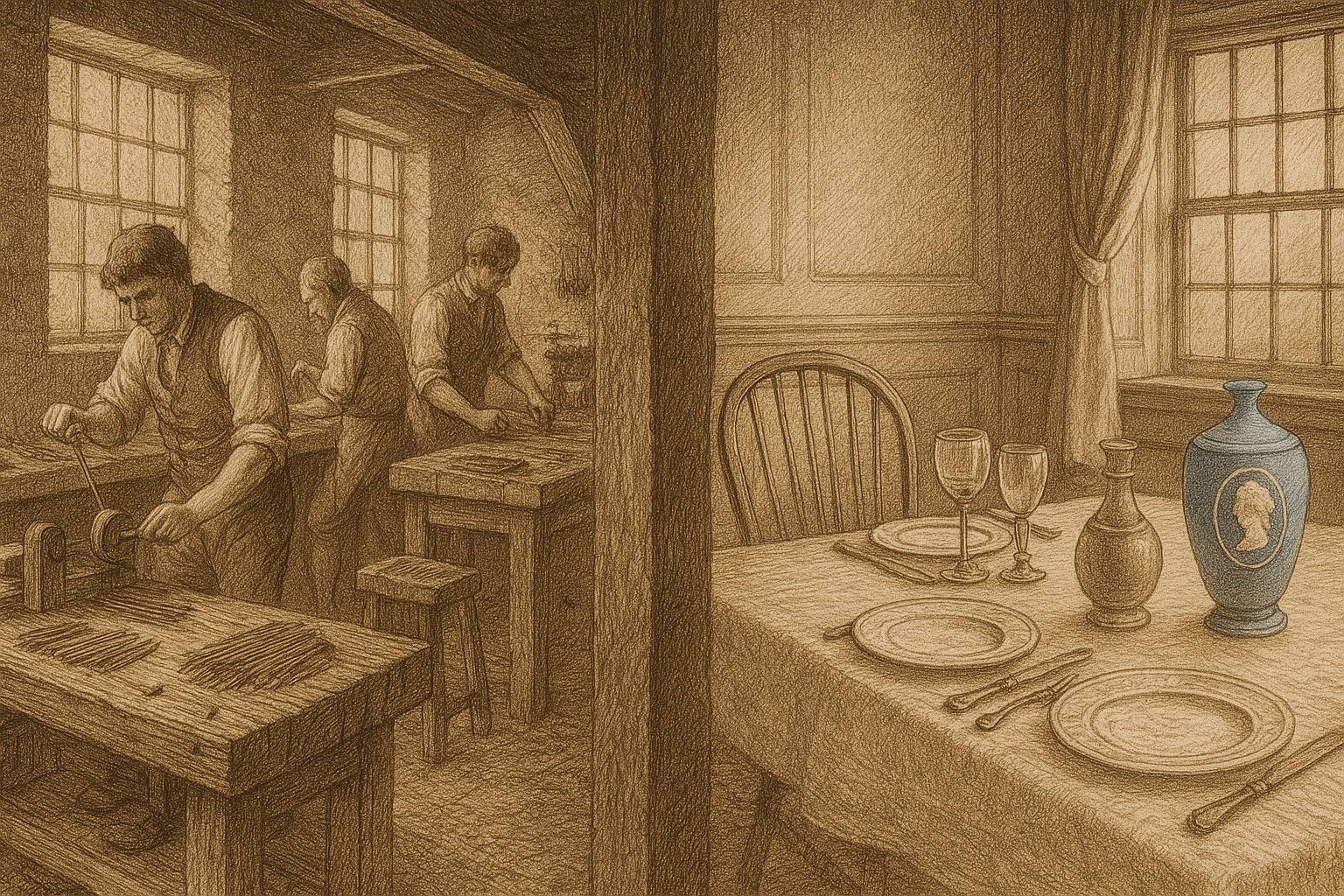
At the Origins of the Valorisation of the Economy (15th–19th Centuries) – Article 4 In eighteenth-century Great Britain, the word “interest” condenses heterogeneous realities that we now distinguish in order to avoid confusion. First, there is financial interest, an instrumental category and the primary one etymologically, which designates the temporal cost of a debt. It…
-
Wealth as a Political Principle: England, 17th–18th Centuries
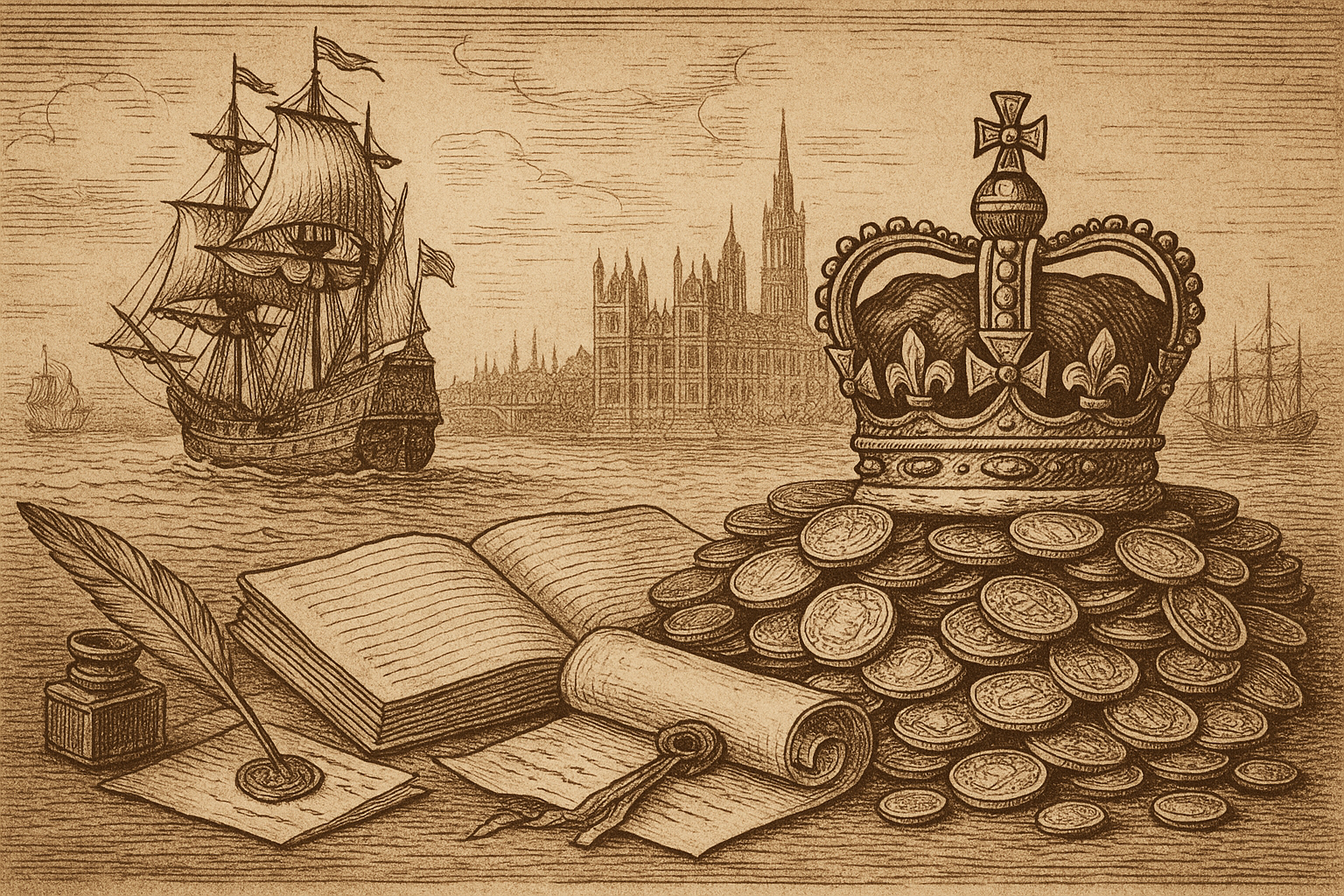
At the Origins of the Valorisation of the Economy (15th–19th Centuries) – Article 3 From the mid-16th to the 18th century, European power underwent a profound transformation. The strength of a state was no longer conceived only in terms of dynastic lineage, military glory, or defence of the true faith. Wealth ceased to be a…
-
The Age of Extractive and Commercial Empires: Spain and the Dutch Republic (16th–17th Centuries)
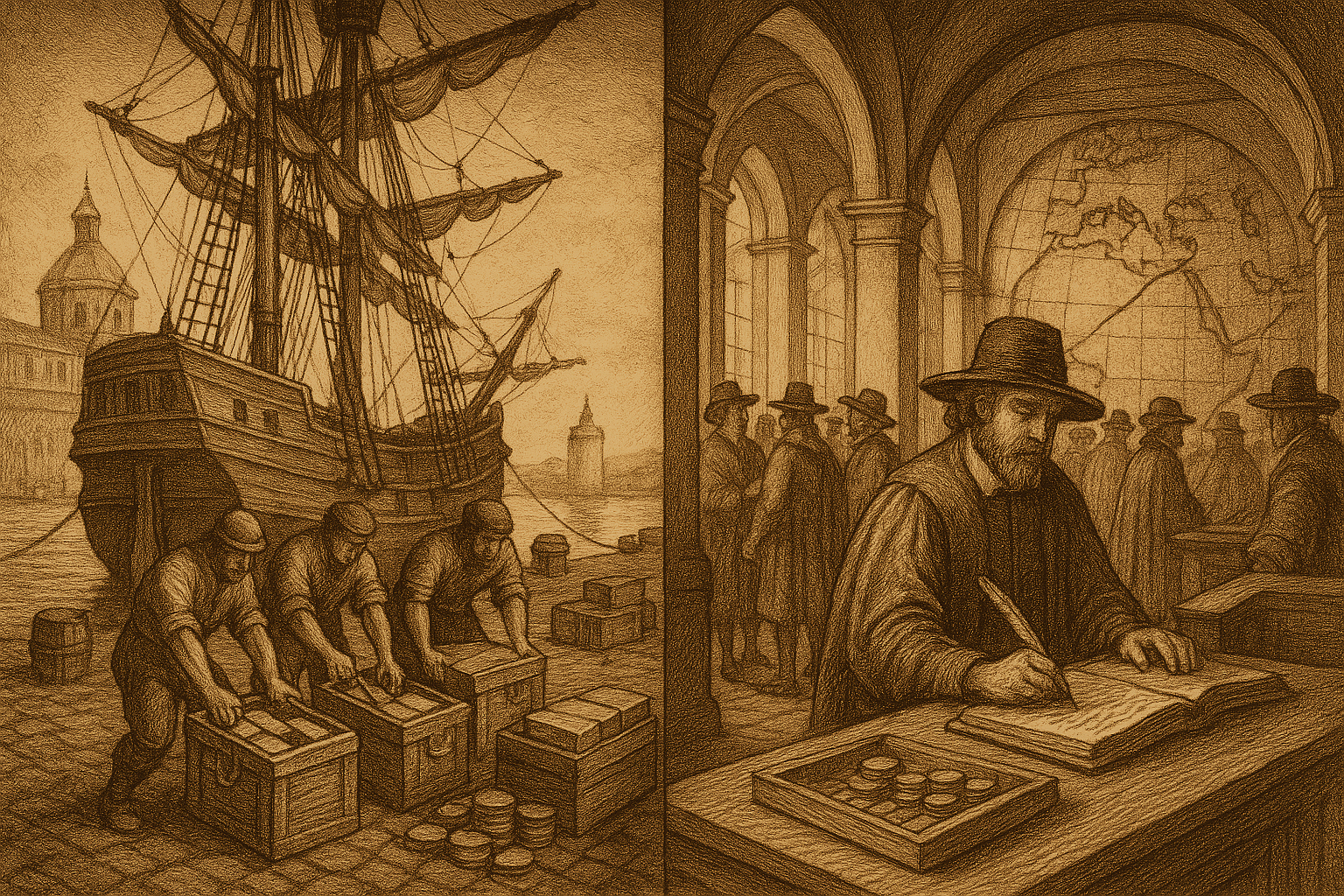
At the Origins of the Valorisation of the Economy (15th–19th Centuries) – Article 2 Spain and the Dutch Republic embody two paths into the first globalisation: the former rested on extraction and imperial coercion; the latter on the organised circulation of goods, information, and credit. From the mines of Potosí to the payment fairs of…
-
When the Economy Becomes a Value: The Turning Point of the Italian Renaissance
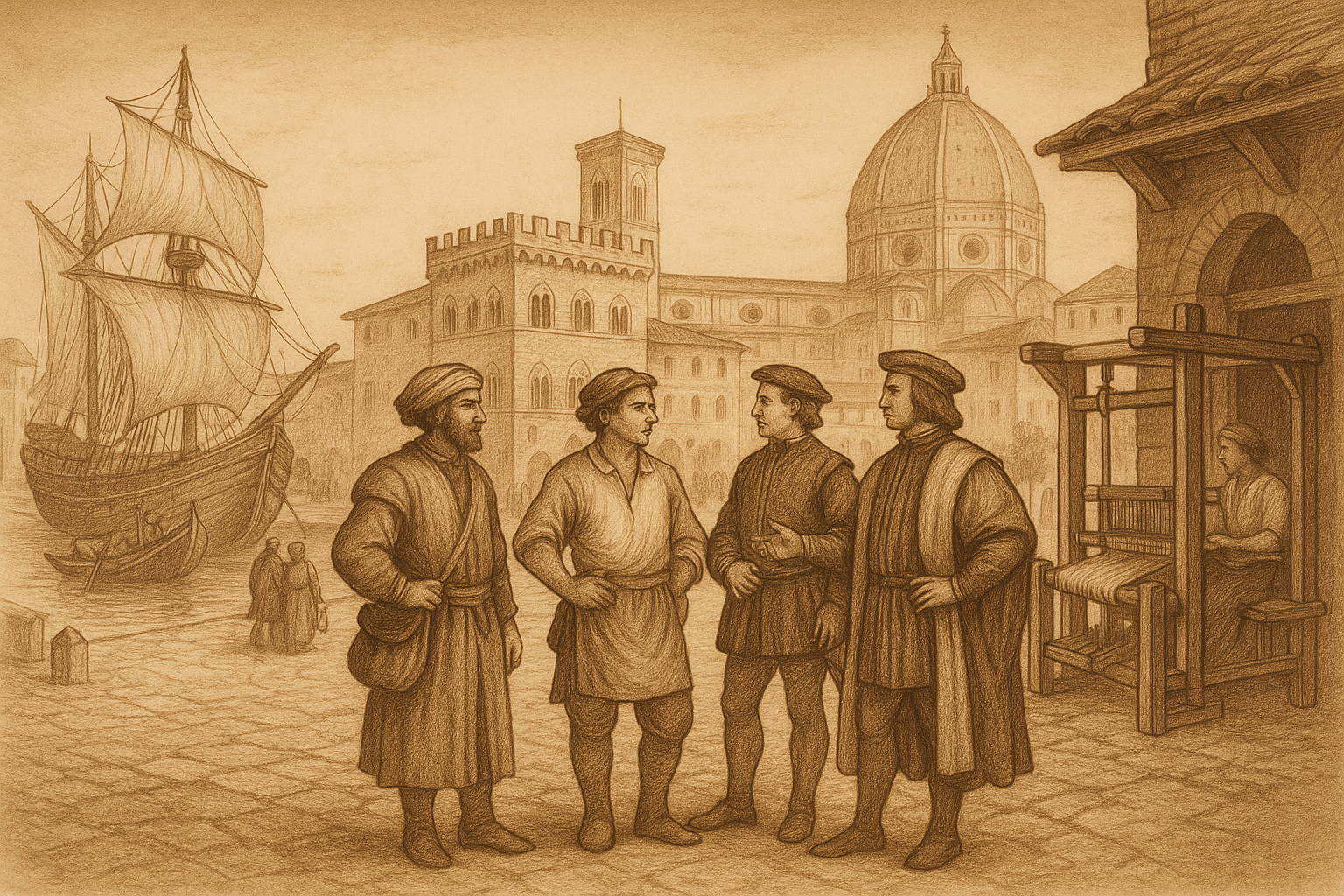
At the turn from the Middle Ages to the Renaissance, the northern Italian city-states usher in a decisive shift: the economy is no longer merely a means of subsistence but becomes a value in political and moral terms. Florence and Venice, governed by oligarchies blending nobility and bourgeoisie, stand out for systems of government markedly…
-
At the Origins of the Valorisation of the Economy (15th–19th Centuries)
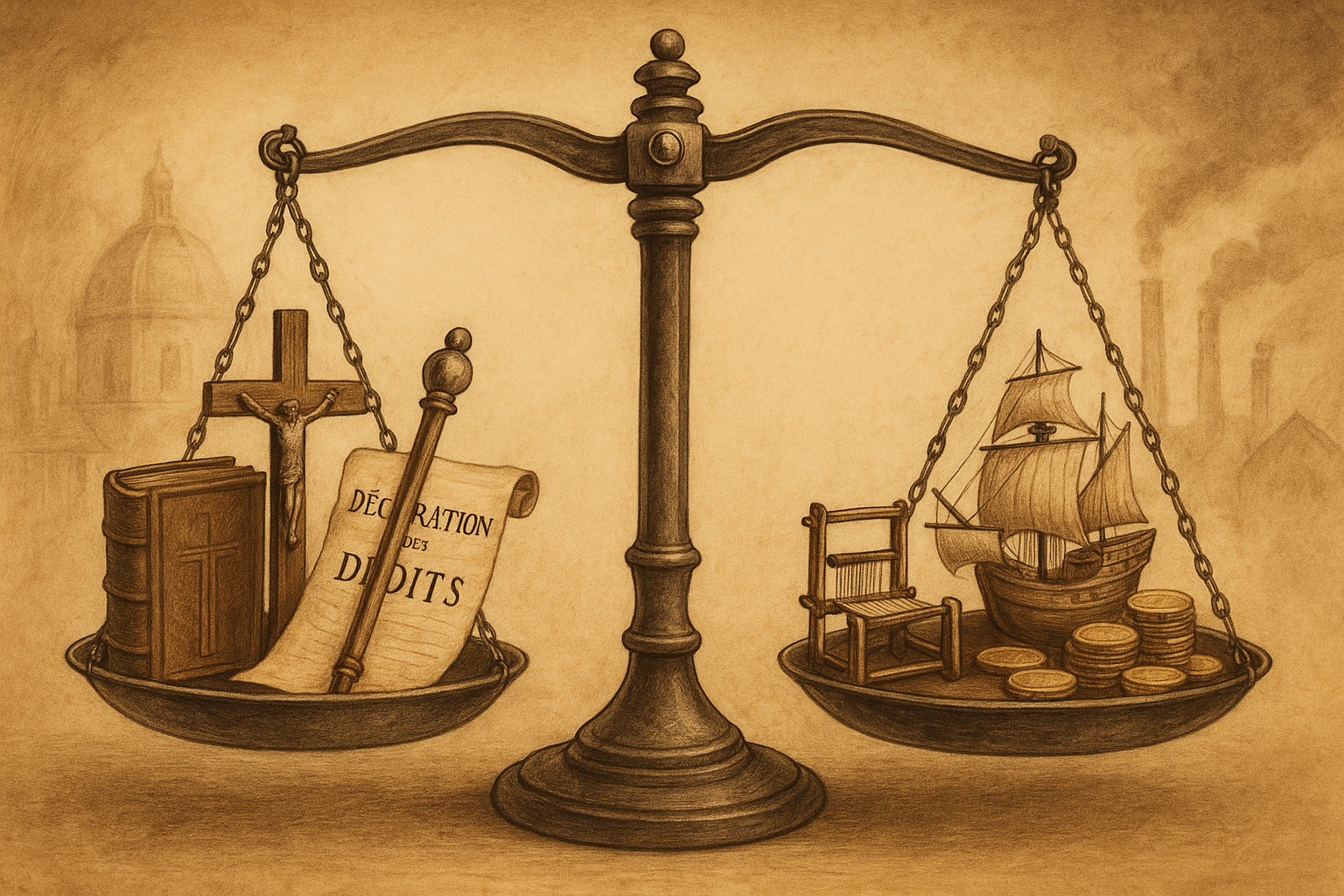
In briefThis series of articles traces how the economy, morally disqualified in the Middle Ages, has been socially and politically valorised since the 15th century. Historical and conceptual itinerary: the Italian Renaissance, the Spanish and Dutch empires, 17th-18th-century England, and 19th-century philosophies. In a world where sustained growth is no longer a given, understanding how…
-
Attachment, a vital emotional bond that can stifle psychological distancing

Since November 2023, several articles have highlighted constraints that limit the ability to achieve psychological distancing and, consequently, to gain freedom of thought and peace of mind: oppositions, idealizations (particularly the pursuit of moral truths), conformity, psychological projection, and the desire for recognition. Here, we will focus on the emotional bond of attachment. While essential…
-
The correlated evolution of privacy, freedom of thought, and idealizations

By studying the evolution of freedom of thought from the 16th to the 18th century,1 we highlighted how its expansion was stimulated by the growth of knowledge and techniques. Here, we will first emphasize another determining factor: the development of privacy. Once again, we will take the example of Montaigne, who will help us identify…
-
Dangers of Unbounded Freedom of Thought and Expression

George Washington said:1 “if Men are to be precluded from offering their sentiments on a matter, which may involve the most serious and alarming consequences, that can invite the consideration of Mankind; reason is of no use to us—the freedom of Speech may be taken away—and, dumb & silent we may be led, like sheep,…