Is the economy a driving force behind democracy or its gravedigger? – Article 4
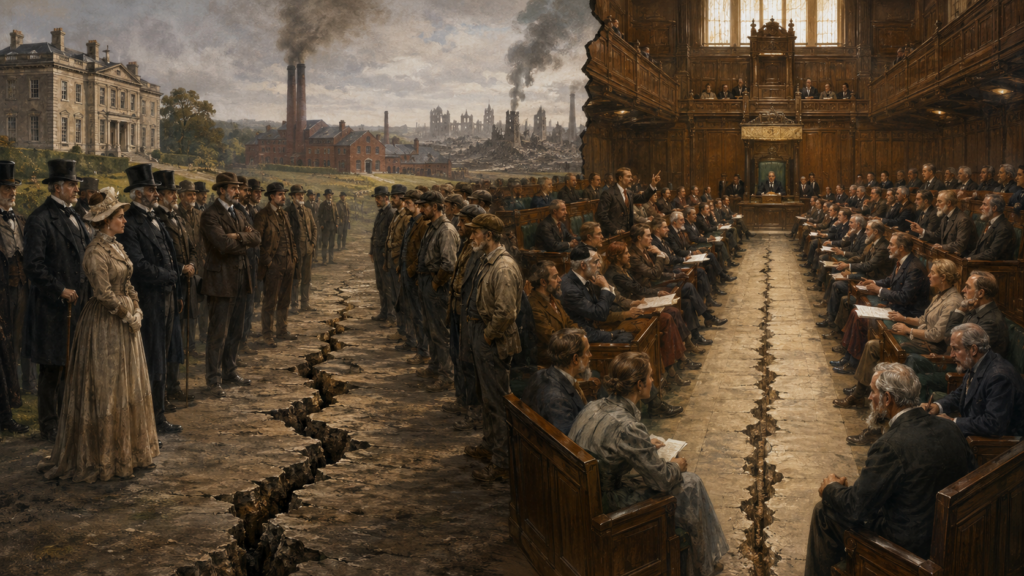
In the aftermath of the Second World War, when Western societies had reduced their internal inequalities and were experiencing a period of exceptional growth, modernisation theory argued that economic development was a key factor in democratisation and the stability of democracies. Complementary analyses soon placed the emphasis on social conflict rather than the economy. According to these analyses, democracy results to a large extent from power struggles between interest groups. More recently, studies have highlighted the role of wars and major economic crises in reducing inequalities in income and wealth.
These different approaches are not mutually exclusive; taken together, they shed light on the political problems of the twentieth century, which are in many respects comparable to contemporary challenges. Moreover, they have forged a vocabulary and a set of presuppositions through which we think about political questions. The place they assign to political culture in relation to interests and conflicts will also be examined. We shall therefore review them from a historiographical perspective. The period beginning in the sixteenth century will thus not be approached as a continuous historical narrative, but through the historical sequences upon which the main theories discussed draw.
Modernisation Theory
Influenced by the theories of Adam Smith, Karl Marx, Émile Durkheim, Max Weber and Talcott Parsons,1 modernisation theory refers, in the post-Second World War social sciences, to a body of analyses linking democratisation to long-term socio-economic transformations: industrialisation, urbanisation, literacy, the expansion of education, the extension of mass communications, rising standards of living or the diversification of social groups, occupations and forms of collective organisation. Although it cannot always be reduced to simple economic determinism, it tends to view societies’ emergence from “traditional” forms as a process that makes them more mobile, better educated and better able to adopt and maintain liberal or democratic political institutions.2 Seymour Martin Lipset offers one of its most influential formulations in his 1959 article, “Some Social Requisites of Democracy”.3
Seymour Martin Lipset’s Seminal Article
Drawing on Max Weber and Joseph Schumpeter, Lipset conceives of democracy as a political system that facilitates the turnover of governing officials; as a social mechanism for resolving conflicts of interest, in which as many people as possible use their votes to choose between contenders for political office. His central thesis is that more developed societies are more likely to sustain democracy, because prosperity, industrialisation, urbanisation and education foster a larger middle class, a more moderate political culture and greater legitimacy for the regime. One element less directly associated with prosperity is the existence of intermediary organisations that act as countervailing powers. These organisations are sources of new opinions that they can disseminate; they contribute to the acquisition of political skills; and they increase interest in politics.4
According to Lipset, economic development constitutes a “mark of the efficiency” of the system as a whole. The stability of a democratic system depends on its efficiency, but also on its effectiveness and legitimacy. Effectiveness denotes the “actual performance of a political system”: its capacity to fulfil the basic functions of government as conceived by society. Legitimacy depends on the system’s capacity to engender and maintain the belief that existing political institutions are the most appropriate.5 It is primarily affective and evaluative: the values upon which democracy rests must command sufficient support. If I dwell on these definitions, it is because they structure contemporary political analyses and because the question of legitimacy appears crucial in polarised political struggles, in which democracy is blamed for its failure to perform.6
Lipset sees what he calls “Weltanschauung politics” as a source of weakness and instability for democracy.7 “Total” ideologies isolate their adherents from the “falsehood” conveyed by others—that is, from reality. Parties that advance such ideologies do not consider themselves subject to political competition and its established rules. They view political struggles as a confrontation between divinely revealed or historically established truth, on the one hand, and fundamental error, on the other. Two principal non-totalitarian groups adopted this kind of orientation in Europe before 1939: Catholics and socialists. Besides these, there were the fascist and communist totalitarian organisations.
Writing in the late 1950s, Lipset describes Western democracies as having entered a “post-politics” phase: differences between left and right are narrowing, as are those between socialists and moderates; conservatives accept the welfare state. This situation reflects the extension of citizenship and suffrage to the working class as a whole. Modernisation has reduced political cleavages and maximised the conditions for “cosmopolitan” politics. The main domestic issue is the distribution of wealth within a Keynesian framework, a distribution that neither requires nor gives rise to extremism.8
Lipset’s optimism contrasts with contemporary polarisation, fuelled to a large extent by inequalities in both income and wealth.9 It may not be unrelated to his focus on aggregate indicators rather than on the historical processes they condense. In particular, he leaves unexplored the mechanisms and events through which wealth is distributed more equally, thereby fostering the expansion of the middle class.
Development and Performance as Conditions for Democratic Survival
Whereas Lipset’s approach presents development as a factor in the emergence of democracy, Przeworski, Alvarez, Cheibub and Limongi argue that it primarily increases the chances that existing democracies will survive. Within this second framework, wealth is more a condition of stabilisation than of emergence: as per capita income rises, democracies become less vulnerable to a return to authoritarian rule.10
This theoretical shift does not remove the limitation identified in Lipset’s analysis regarding the expansion of the middle class. Przeworski and his co-authors shed no further light on this subject. Instead, they indicate that, when such conditions exist, they make overturning democracy more costly. The economy therefore appears not as an autonomous foundational force, but as a set of resources, interests and protections capable of consolidating the democratic order.
The recent analysis by Fukuyama, Dann and Magaloni recasts this problem in terms of performance—what Lipset calls effectiveness. In a context of democratic backsliding, citizens demand visible results from those who govern them, beyond the fulfilment of promises and adherence to procedures or the law: growth, infrastructure, public services, security, and reductions in poverty or inequality.11 Democracy rests not only on procedural legitimacy, but also on its capacity to produce tangible material outcomes. This capacity echoes the theories of Hobbes and Locke, which associate the social contract with material benefits in return.12
The demand for performance places democracy under pressure, since it rests on procedures, checks on power, transparency in decision-making, legal remedies and citizen participation. All of these processes take time. Yet they are not mere technical obstacles: they are part of democracy itself. If democracy sacrifices these forms of mediation in the name of efficiency, it moves closer to the authoritarian model of performance; if it persistently fails to deliver public goods, it fuels distrust of its own principles. Democratic performance must therefore remain a form of performance bounded by liberty, equality, pluralism and moderation in the exercise of power.
In the approaches of Przeworski and Fukuyama, development and performance do not replace political principles; they condition their stability and credibility. Democracy is more likely to survive when it can demonstrate that its procedures are not only just in principle but also capable of organising a materially viable life in common.
Development and Changing Values
Over recent decades, sociologist Ronald Inglehart has refined modernisation theory. In Cultural Evolution (2018),13 he argues that “people’s values and behavior are shaped by the degree to which survival is secure.” When survival is uncertain, he maintains, people tend to rally behind a strong leader and unite against outsiders—a strategy he calls the “Authoritarian Reflex”. According to him, unprecedented levels of economic and physical security have brought about an intergenerational shift towards self-expression and postmaterialist values: with less need to worry about their security, younger generations focus more on the freedom to choose how to live their lives, freedom of expression, gender equality and participation in economic and political decision-making. This cultural evolution is accompanied by strategies aimed at maximising human happiness.
Inglehart draws the following analogy with biology: just as genetic mutation produces changes in a living organism, mutations in values produce far-reaching social change. However, unlike genetic transmission and selection, culture is acquired through education. Cultural change can therefore occur more rapidly.
Although Inglehart emphasises that there is a balance between the driving forces of modernisation and the enduring influence of tradition, it seems clear to him that economic development is more likely to lead to democracy than to authoritarianism. In the early stages of industrialisation, authoritarian states are just as likely as democracies to achieve high growth rates. Once a certain level of development is reached, however, democracy becomes increasingly likely to emerge and survive. Against this background, Inglehart sees no reason to believe that this dynamic will not apply to Russia and China: the former has recovered from the decline that followed the fall of communism; the latter, although it continues to repress its political opponents, has experienced strong growth since 1980, which tends to increase demands for political openness and democratisation.
Inglehart’s optimism contrasts sharply with present-day reality in both Russia and China. In each case, ideology combined with technology has reinforced the iron grip exerted over the population.
Democracy as a Product of Conflict
Class Structure and Democracy
Let us return to the blind spot in modernisation theory mentioned above: how does the wealth generated by economic development come to be distributed more equally and foster the expansion of a middle class? Barrington Moore Jr., and later Dietrich Rueschemeyer, Evelyne Huber Stephens and John D. Stephens (hereafter RSS), argue that greater political equality results from conflict between social classes, which are themselves transformed by the expansion of capitalism.14
Jon Elster defines the concept of class in terms of attributes (land ownership, intangible skills and cultural traits) and behaviours (working versus not working, selling versus buying labour power, lending versus borrowing capital, and so forth): a class is a group of people who, if they are to make the best use of their attributes, are compelled to engage in the same activities.15 RSS infer from this definition that classes are shaped by the structure of capitalist production and its development. They in turn define class as a social category “for analysing conflicts of interest”,16 and distinguish three levels of analysis, none of which can be determined from another:
- Class structure, rooted in the organisation of production and modified by forms of mobility and social interaction.
- The ideas and dispositions of class members—that is, class consciousness.
- The formulation and pursuit of goals through collective action undertaken in the name of the class.
Let us illustrate these theoretical elements with historical examples. In sixteenth-century England, the Tudors consolidated royal power.17 The resulting peace, combined with support for the wool trade, gave a particular impetus to the development of commerce and capitalism in the countryside. At the same time, in Spain, transhumant sheep farmers and their flocks contributed to the centralisation of royal power. Why did apparently similar political and economic conditions lead to divergent trajectories?
Drawing on R. H. Tawney’s analyses, Moore argues that ideas and dispositions evolved under the pressure of circumstances: people ceased to view the agrarian question as a search for the best methods of supporting more people on the land. They increasingly saw land as something that could be bought and sold, as capital that could generate a return. The organic relationship with the land gave way to an economic one. Long before Adam Smith, scattered groups in the English countryside began to “accept self-interest and economic freedom as the natural basis of human society”.18
The most striking sign associated with this change was the boom in the land market, which began around 1580 and lasted for a century. This boom was accompanied by the enclosure movement, whereby individuals fenced off land reserved for common use—in other words, appropriated and privatised it. The management of this privatised land fell to men motivated by profit, who did not necessarily belong to the landed nobility. The yeomen, a class situated between the gentry and the less prosperous peasants, were the main driving force behind enclosure. Ordinary peasants, for their part, emerged as the principal losers from this transformation.19
In sixteenth- and seventeenth-century England, commercial and agricultural transformations brought about a far-reaching change in the country’s class structure: merchants, landowners and those who farmed the land expanded their economic power, while peasants suffered. Unlike in France, men of commerce operated independently of royal power, although they readily collaborated with it in pursuit of profit. By the eve of the Civil War, however, wealthy townsmen opposed the Crown’s monopolies. A “convergence of interests” emerged between a substantial part of the landed aristocracy and the townsmen, whose collective actions defended their respective interests.
The emergence of mixed government in England thus resulted from a restructuring of classes, as well as from the balance of power and alliances between them. This dynamic contrasts with that of the young American republic in the late eighteenth century, where, as we have observed, factions were viewed negatively, particularly because they could lead to a tyranny of the majority.20 The ideal of a society comprising a single class prevailed.
RSS emphasise that, in the nineteenth century, Jeremy Bentham and James Mill regarded democracy as compatible with a society divided into classes: either workers would adopt a deferential attitude towards their superiors, or they would see themselves as capitalists and act accordingly. If, by contrast, they were able to gain power, they would pose the risk of a tyranny of the majority. This is why John Stuart Mill devised democratic arrangements—plural voting for educated or qualified people—that favoured intellectual elites.21
In practice, extending political rights to the working class did not have the adverse consequences feared by Mill. According to RSS, this extension resulted primarily from a struggle by the working class and, more broadly, by those who were excluded, not from the implementation of a universalist political ideal. In particular, after leading the revolutions of the late eighteenth century and securing its political status, the bourgeoisie rarely fought to extend political rights. Because the working class was too weak to win such rights on its own, however, it turned to the urban and rural petty bourgeoisie—merchants, artisans, farmers and other self-employed groups not subject to political pressure.22
Institutions Shaped by Social Conflict
Modernisation theory and analyses based on social conflict are not incompatible: class struggles help to explain how power and wealth are redistributed; they do not call into question the causal relationship between development and democracy. The work of Daron Acemoglu and James A. Robinson likewise builds on social conflict while rejecting the hypothesis that high per capita income leads to democratic rule.
In Economic Origins of Dictatorship and Democracy (2005),23 Acemoglu and Robinson set out their theoretical framework, which rests on two major premises. The first is the use of game theory to model economic behaviour: individuals have well-defined preferences over the outcomes or consequences of their actions; they assess their options, including political ones, and often pursue strategies. The second premise is the adoption of a Hobbesian anthropology: “politics is inherently conflictual”; politics unfolds against a backdrop of political and economic competition between groups of individuals akin to Marxian classes, whose interests diverge. Political power comprises legal (de jure) power and actual (de facto) power: interest groups use their de facto power, bolstered by economic resources, to acquire de jure power, which provides them with a long-term political advantage. Economic and political institutions are the outcome of this struggle for power.
Acemoglu and Robinson acknowledge an intellectual debt to Moore in their analysis of the origins of democracy.24 Like him, they rely first and foremost on the historical example of England from the seventeenth to the nineteenth century. They emphasise that, in the seventeenth century, merchants and landowners whose activities were oriented towards commerce wielded influence in the political arena. Regarding the nineteenth century, they maintain that the extension of the franchise was spurred by credible threats of revolution, particularly by uprisings among social strata excluded from political participation.
The conflictual logic advanced by Acemoglu and Robinson, which generates democratic institutions, is not necessarily underpinned by economic development. In a 2008 article, Acemoglu, Johnson, Robinson and Yared challenge the correlation between income and democracy, a “cornerstone of the influential modernization theory”.25 They undertake statistical analyses of per capita income and democracy across different countries, using two successive methods.26 In both cases, they find no clear causal effect of income on democracy.
What About Culture?
In examining the American Revolution and the early Republic, we emphasised English and French intellectual influences.27 Hobbes stands foremost among them because he introduced major innovations into political philosophy. Yet, unlike Harrington, and in contrast to many aspects of Locke’s philosophy, he was not a republican. Moreover, the republican and democratic culture of the English colonies in America cannot be reduced to philosophical theories; it rested just as much, if not more, on established practices,28 which often arose out of necessity—notably from the scarcity of labour, which gave colonists political weight.29
In Economic Origins of Dictatorship and Democracy, Acemoglu and Robinson mention the nascent United States in their discussion of the US Constitution, where they invoke Charles Beard’s materialist interpretation, even though it has been challenged ever since it was advanced in 1913 for overlooking cultural factors. Yet, over the course of the twentieth century, historians such as Bailyn and Wood produced wide-ranging studies that balance the material and cultural dimensions. This is no incidental point, since it highlights a theoretical blind spot that calls for the Hobbesian anthropology to be qualified: the birth of the United States shows that the revolutionary conflict was waged against Great Britain, whereas domestic tensions were resolved largely through democratic debate, as exemplified by the ratification of the Constitution. It was partly thanks to its republican culture that the United States survived as a democracy, even though the transition from Washington’s presidency to Jefferson’s might have taken an authoritarian turn.30
Although culture itself often has conflictual origins, it cannot be reduced to conflict: according to tradition, the earliest laws of ancient Greece were adopted in the wake of social conflict, but once democratic political institutions had been established, laws resulted from debate rather than conflict.
Game theory and political conflict—Acemoglu and Robinson’s materialist and conflict-centred anthropological premises—form part, in my view, of the philosophical and historical process of the modern devaluation of virtue in favour of the interplay of interests.31 This process is compatible with freedom and equality, the foundational moral values of contemporary democracies, as well as with political and economic institutions based primarily on counterbalancing interests and placing them in competition. As we have seen in the previous articles, freedom, equality and political and economic mechanisms based on the interplay of interests have been philosophically intertwined in Western societies.
The Reduction of Income and Wealth Inequality at the Cost of Crises and Wars
The theories of Moore, RSS, and Acemoglu and Robinson highlight the importance of social conflict in the emergence and stabilisation of democracies. The economy alone is not sufficient to generate the conditions for democratic government or to prevent authoritarian drift. We have seen bitter evidence of this for a decade now, especially with Donald Trump.
One particularly striking aspect of these current forms of backsliding is the considerable increase in income and wealth inequality. Yet, since ancient Greece, democracy has been philosophically associated with equality—a legal equality that also finds expression, to some extent, in material conditions. Contemporary political science has broken with this intuitive link by showing that it is by no means self-evident.32
If democracy neither necessarily produces equality nor arises from it, what enabled the West to achieve less unequal conditions for much of the twentieth century? In Capital in the Twenty-First Century, Thomas Piketty shows that wealth and income inequality declined significantly between 1914 and 1945. With regard to France, he argues that the reduction of inequality over the preceding century was the chaotic product of wars and the economic and political shocks they caused, rather than of gradual, consensual and peaceful change. In the twentieth century, he writes, “it was war, and not harmonious democratic or economic rationality, that erased the past and enabled society to begin anew”.33
Beyond France, the compression of inequality during the first half of the twentieth century resulted less from the material destruction caused by wars than, on the one hand, from state-led expropriations and nationalisations and, on the other, from low levels of private investment and low returns on those investments.34 The wars, as well as the 1929 crisis, which undermined confidence in capitalism and liberalism, encouraged interventionist policies. Nationalisations played “a central role in many European countries and [led] to the creation of a large public sector in the 1950s–1970s”.35 On the financial front, public debt soared during the wars, absorbing domestic savings, which under those conditions no longer financed private investment.
In The Great Leveler, historian Walter Scheidel echoes Piketty’s preceding analysis. He notes that, during the First World War, the tax rate on the highest incomes rose from 6 per cent to 30 per cent in Britain and from 13 per cent to more than 50 per cent in the United States. War profits were also taxed more heavily in both countries—at rates of up to 60 per cent in the United States and as high as 80 per cent in the United Kingdom in 1917.36
Scheidel also notes that mobilisation during the two world wars fostered trade unionism and, consequently, workers’ bargaining power. In Britain, union density quadrupled during and after the First World War, before declining and then returning to the same peak during the Second World War. In the United States, it began to rise sharply with the New Deal and the National Labor Relations Act of 1935, which guaranteed workers the right to organise and engage in collective bargaining. After levelling off for a time, it received a further impetus from the Second World War, before union density gradually declined.37
The work of Piketty and Scheidel shows that neither the economy nor social conflict alone is sufficient to establish greater material and financial equality. Shocks of extraordinary violence—the world wars and the 1929 crisis—were required to reduce inequality significantly and durably in the twentieth century.
A Lesson from History?
The theoretical trajectory we have followed shows that economic development is one factor among others in democratisation. Prosperity provides the material and financial means to establish democratic institutions and the leisure required for political participation. It does not, however, guarantee any particular distribution of political power or wealth. Historically, political struggles have helped to establish and consolidate democratic regimes in the West. They have also contributed to greater political and economic equality, but where material and financial conditions are concerned, the period from 1914 to 1945 illustrates that they too probably have their limits.
Historians today are reluctant to speak of “lessons from history”, which is all the more understandable in a context in which technologies and international relations are changing rapidly and profoundly. Nevertheless, it seems to me that the challenge of economic equality remains comparable to that faced in the first half of the twentieth century. Will a new wave of unionisation be required to address it? Would such a movement be sufficient? In the light of the history of inequality in the twentieth century, I doubt that it would.
Whatever happens, since the correlation between equality and democracy remains a matter of debate, reducing inequality cannot be regarded as a sufficient guarantee against authoritarian drift. Beyond the distribution of wealth alone, the notion of prosperity must be examined: although absent from the values articulated during the revolutions of the late eighteenth century, it nevertheless became established as both a political goal and a value over the nineteenth and twentieth centuries. This is what we will examine in the next article in this series.
Notes
1 Andrew C. Janos, Politics and Paradigm: Changing Theories of Change in Social Science, Stanford University Press, 1986.
2 Daniel Lerner, The Passing of Traditional Society: Modernizing the Middle East, Free Press, 1958; Walt W. Rostow, The Stages of Economic Growth: A Non-Communist Manifesto, Cambridge University Press, 1960; Gabriel A. Almond and Sidney Verba, The Civic Culture: Political Attitudes and Democracy in Five Nations, Princeton University Press, 1963.
3 Seymour Martin Lipset, “Some Social Requisites of Democracy: Economic Development and Political Legitimacy”, The American Political Science Review, 1959.
4 Seymour Martin Lipset, “Some Social Requisites of Democracy: Economic Development and Political Legitimacy”, The American Political Science Review, 1959.
5 Ibid.
6 On the performance topic, see in particular: Thomas Carothers and Brendan Hartnett, “Misunderstanding Democratic Backsliding”, Journal of Democracy, July 2024, vol. 35, n°3, 24–37; Francis Fukuyama, Chris Dann and Beatriz Magaloni, “Delivering for Democracy: Why Results Matter”, Journal of Democracy, April 2025, vol. 36, n°2, 5-19.
7 https://en.wikipedia.org/wiki/Worldview
8 Seymour Martin Lipset, op. cit.
9 Nolan McCarty, Keith T. Poole and Howard Rosenthal, Polarized America: The Dance of Ideology and Unequal Riches, MIT Press, 2006; John Voorheis, Nolan McCarty and Boris Shor, Unequal Incomes, Ideology and Gridlock: How Rising Inequality Increases Political Polarization, SSRN, 2015; Yanfeng Gu and Zhongyuan Wang, “Income Inequality and Global Political Polarization: The Economic Origin of Political Polarization in the World”, Journal of Chinese Political Science, Springer, 2022; Jennifer McCoy, Tahmina Rahman and Murat Somer, “Polarization and the Global Crisis of Democracy: Common Patterns, Dynamics, and Pernicious Consequences for Democratic Polities”, American Behavioral Scientist, SAGE, 2018; Eli G. Rau and Susan Stokes, “Income Inequality and the Erosion of Democracy in the Twenty-First Century”, Proceedings of the National Academy of Sciences, National Academy of Sciences, 2025.
10 Adam Przeworski, Michael E. Alvarez, José Antonio Cheibub and Fernando Limongi, Democracy and Development: Political Institutions and Well-Being in the World, 1950–1990, Cambridge University Press, 2000.
11 Francis Fukuyama, Chris Dann and Beatriz Magaloni, “Delivering for Democracy: Why Results Matter”, Journal of Democracy, Johns Hopkins University Press, April 2025, vol. 36, n° 2, p. 5-19.
12 Fukuyama et al. explicitly mention Hobbes and Locke. I have discussed these contractual elements in detail here: https://damiengimenez.fr/wpdgi_article_en/wealth-as-a-political-principle-england-17th-18th-centuries/
13 Ronald Inglehart, Cultural Evolution, Cambridge University Press, 2018.
14 Barrington Moore Jr., Social Origins of Dictatorship and Democracy, Penguin University Books, 1974 (1966); Dietrich Rueschemeyer, Evelyne Huber Stephens and John D. Stephens, Capitalist Development and Democracy, University of Chicago Press, 1992.
15 Jon Elster, Making Sense of Marx, Cambridge University Press, 1985 in Dietrich Rueschemeyer, Evelyne Huber Stephens and John D. Stephens, op. cit., p. 51 sq.
16 Ibid.
17 Barrington Moore Jr., Social Origins of Dictatorship and Democracy, op. cit., p. 7.
18 Ibid., p. 8.
19 Ibid., p. 9-12.
20 https://damiengimenez.fr/wpdgi_article_en/the-conflicting-orientations-of-the-early-american-republic/
21 Dietrich Rueschemeyer, Evelyne Huber Stephens and John D. Stephens, op. cit., p. 45.
22 Ibid., p. 46-61.
23 Daron Acemoglu and James A. Robinson, Economic Origins of Dictatorship and Democracy, Cambridge University Press, 2006 (2005).
24 The title of their book, Economic Origins of Dictatorship and Democracy, echoes that of Moore’s Social Origins of Dictatorship and Democracy.
25 Daron Acemoglu, Simon Johnson, James A. Robinson and Pierre Yared, “Income and Democracy”, American Economic Review, 2008, 98:3, 808–842. They mention Lipset’s article (1959), and also those of Dahl (1971), Huntington (1991) and RSS (1992).
26 They first control for country-specific historical factors assumed to be time-invariant; they then use instrumental variables—past savings rates and trading partners’ incomes weighted by their shares in the country’s trade.
27 https://damiengimenez.fr/wpdgi_article_en/the-conflicting-orientations-of-the-early-american-republic/
28 https://damiengimenez.fr/wpdgi_article_en/modern-conceptions-and-practices-of-political-liberty-and-equality/#Democratic_Practices_in_the_American_Colonies
29 https://damiengimenez.fr/wpdgi_article_en/from-antiquity-to-the-dawn-of-modern-revolutions-did-commerce-foster-equality/#Colonial_Virginia_An_Equality_of_Circumstance
30 Steven Levitsky and Daniel Ziblatt, The Tyranny of the Minority, Penguin Books, 2023, chapter 1.
31 https://damiengimenez.fr/wpdgi_article_en/the-conflicting-orientations-of-the-early-american-republic/
32 Christian Houle, “Inequality and Democracy: Why Inequality Harms Consolidation but Does Not Affect Democratization”, World Politics, 61, no. 4 (2009): 589–622; B. Ansell and D. Samuels, “Inequality and Democratization: A Contractarian Approach”, Comparative Political Studies, 2010, 43(12), 1543-1574; Daron Acemoglu, Suresh Naidu, Pascual Restrepo, and James A. Robinson, « Democracy, Redistribution and Inequality, » NBER Working Paper 19746 (2013), https://doi.org/10.3386/w19746.
33 Thomas Piketty, Le capital au XXIe siècle, Éditions du Seuil, 2013, chapter 8.
34 Thomas Piketty, Capital et idéologie, Éditions du Seuil, 2019, chapter 10 : “The physical destruction of houses, buildings, factories and assets of every kind during the two wars, despite its considerable scale […], can account for only a minority of property losses: between one-quarter and one-third in France and Germany (already a considerable proportion), and a few per cent at most in the United Kingdom.”
35 Ibid.
36 Walter Scheidel, The Great Leveler, Princeton University Press, 2017, chapter 5.
37 Ibid.