Is the economy a driving force behind democracy or its gravedigger? – Article 1
In Antiquity, the wealth of states rested first and foremost on agriculture.1 While commerce contributed to collective enrichment, it operated within social frameworks shaped by religion and politics. Military victories, for their part, provided booty, slaves and, in cases of conquest, new sources of revenue.
By the late Middle Ages, commerce had acquired civic respectability in the Italian city-states.2 It then established itself, in the United Provinces and in England, as a factor of geopolitical power within a globalising world. Alongside this evolution, the political regimes of these countries became more flexible, adopting republican forms. Beyond this historical correlation, was there a causal relationship? Did commerce foster the advent of more egalitarian institutions? We will draw out elements of an answer to this question by examining various political configurations, from ancient Egypt and the Near East to the American colonies of the 17th and 18th centuries.
Before embarking on our historical excursion, let us clarify why we prefer the expression “restricted equality” to the word oligarchy when considering history as a whole. According to Aristotle, oligarchy is a degenerate form of aristocracy, in which a limited number of wealthy individuals take part in government.3 In Antiquity and the Middle Ages, oligarchies in a sense widened the boundaries of aristocracy, incorporating people who had made their fortune. This is notably why there naturally existed a sense of belonging to the same governing class.
Nowadays, oligarchy refers to a shifting set of wealthy individuals who do not necessarily participate in political power,4 which marks a major difference from Antiquity. One break with the 19th and 20th centuries is that class consciousness based on social function — wage labour, employers, shareholders, and so on — has eroded, particularly under the influence of neoliberalism.
If the most affluent individuals converge, it is first because they adopt similar strategies to maximise their income and capital, notably by avoiding taxation. For the rest, their orientations are diverse, their allegiances fleeting.5 Although it does offer insights, the term oligarchy, now back at the forefront of intellectual debate,6 obscures the lack of cohesion among the wealthy, underpinned by the tendency of economic competition to reshuffle the deck and social networks.
The concept of equality, for its part, evokes a graduated scale rather than classes: situations are more or less equal. Despite the dual social meaning of equality — referring either to a form of justice or to a distribution of wealth — it seems better suited to the contemporary historical context, in which the notion of class gives way in places to that of movement, grouping interests together in a less enduring way, and in which social boundaries are less fixed. Moreover, it applies just as well to other historical periods.
Ancient Near East and Mediterranean
Egypt, Phoenicia and Mesopotamia
From the third millennium BCE — long before Athens’ evolution towards a democratic regime — some governments in Egypt, Phoenicia and Mesopotamia included deliberative assemblies, that is, forms of participation.7 Myths, in which the gods take counsel, reflect these practices, attested by several texts8.
Can we go so far as to speak of democracy before Athens?9 To the extent that the contours of the concept of democracy fluctuate, and that for Yves Schemeil it appears above all as a “political dream”,10 describing these assemblies as democratic is justified. The controversy grows when it comes to questioning Athens’ originality, and describing it as the heir to oriental practices.11
Let us leave this debate aside in order to consider the place of commerce. Throughout Antiquity, the Near East was a zone of commercial exchange that could extend as far as China:12 Mesopotamia exported pottery, glass, grain, leather, fish, vegetable oil, masts and textiles. It imported copper, ivory and precious stones from India; wood, papyrus, gold and silver from Phoenicia, Egypt and Asia Minor. Before states struck coins, silver and grain served as means of exchange. Forms of barter were also practised.
Although commercial flows irrigated the Near East, in Egypt and in the Neo-Assyrian Empire — from the 10th to the 7th centuries BCE — most state revenue came from agricultural taxes, which amounted to around 10 per cent of production.13 Substantial income was also derived from wars, booty and tribute. Phoenicia — a region roughly corresponding to present-day Lebanon — represents a particular case: possessing little arable land compared with its neighbours, which were better endowed with rivers, it was ideally situated from a commercial standpoint.14 It is not certain, however, that commerce was its main source of revenue.
Was the economic weight of commerce in the ancient Near East a factor in the democratisation of political practices? Did commercial exchange foster a degree of political openness? Nothing allows us to observe anything more than a historical correlation between commerce and restricted equality. In order to circulate freely, Phoenician merchants paid tribute to neighbouring empires.15 Those of Egypt or Mesopotamia, for their part, do not seem to have played any particular role in the existing assemblies.
Athenian Democracy
What conditions presided over the extension of political participation? The collapse of Mycenaean civilisation — around 1200–1100 BCE — accompanied the transition from the Bronze Age to the Iron Age. The Greek population then fell from around 600,000 to 330,000 people by 1000 BCE;16 palaces were abandoned, cities became depopulated, writing disappeared, artistic and technological innovations ceased, as did colonisation.17
The trend was radically reversed in the 9th and 8th centuries: the cultivation of arable land replaced pastoralism, a regime of smallholdings spread and, with population growth, colonisation resumed.18 At the same time, commerce developed, notably in metals — exports of iron and silver, imports of tin and gold —19 and in pottery.20 Activities linked to navigation — commerce, colonisation and war — contributed to the use of metals and to technical innovation. The new cities competed architecturally to build the most majestic sanctuaries. Another major break linked to commercial exchange was the introduction of the alphabet around 750 BCE, inspired by that of the Phoenicians, which made learning to write more accessible.21
These developments took place against a backdrop of non-centralised power and even, according to Christian Meier, a certain “apolitical” character of Greek culture.22 Initially, they did not benefit an aristocratic elite alone, but the gains gradually became concentrated within a restricted circle of families.23 Economic growth preceded the formation of oligarchies, the spread of debt slavery and social fragmentation. It was in this context that sages and tyrants succeeded one another in Athens in the 7th and 6th centuries, preparing the advent of democracy in the 5th century.
Commerce and craft production, more than in the Near East, accompanied a dynamic of social dislocation, which may not be unrelated to their negative moral perception among the Greeks and, more generally, to the devaluation of non-agricultural labour in Greek culture. Their rise called into question the multiplicity of small landed properties associated with a cooperative political equilibrium.
Unlike commerce and craft production, military activities — which also had a major economic impact — were particularly valued, remaining intimately linked to religion and its epics. While the innovation of the “hoplite phalanx” may have stimulated political cohesion, it seems more probable that democratisation was fostered by the incorporation of intermediate and modest social groups into the army — hoplites on land, thetes at sea — over the course of the 6th and 5th centuries.24
In this context, the reforms of Solon, Cleisthenes, Ephialtes and Pericles extended to all citizens the possibility of participating in the assemblies, the courts and most of the magistracies that governed the city. Citizenship also established itself as a status that conditioned access to landed property.25 In some cities, it was itself conditioned by landownership. Moreover, land was exempt from taxes, with the tithe and other forms of direct taxation being regarded as the mark of tyranny.
Pericles’ reform, which introduced payment for participation in the people’s court, is emblematic of the fact that the Athenians privileged politics over economics. The latter did not exist independently: it was subordinated to politics and religion, which did not prevent the city from proving “high-performing” and materially surpassing its Greek rivals.26 Military success in the Persian Wars and Aegean domination through the Delian League stemmed partly from democratic agility and innovation, but also from the Laurion silver mines, which financed the fleets.27 Beyond military victories, these fleets contributed to the rise of commerce,28 which in the 4th century largely underpinned Athenian prosperity.29 The sources of Athenian prosperity evolved: in the 5th century, they owed much to the Laurion mines, military successes and Aegean domination; in the 4th century, they rested more on commerce, the activities of Piraeus and the institutions that framed exchange, in a context in which Athenian imperialism no longer played the same role.
Finally, let us emphasise that Greek democracy cannot be reduced to political participation: justice, fundamental to Hellenic culture, permeates myths, philosophies and tragedies.30 According to Parmenides, justice “holds” being, that is, reality. Conversely, justice is grounded in nature: for Solon, there exists a social causality that corresponds to the “causality which the Ionian philosophers of nature were discovering […] in cosmic phenomena. Justice as Solon conceives it is the health of the community.”31 The primacy of justice thus contributes to valuing politics over economics. In Athens, democracy is literally deified, represented as a goddess crowning an elderly bearded man, who symbolises the people.32
Written political laws — as opposed to oral customary laws — inherited the cultural importance of justice.33 The fact that they were now inscribed on stones, visible to all, fostered but did not necessarily guarantee greater equality and stability,34 as reflected in the late 5th-century debate over the conventional character of laws, which set philosophers against sophists. Athens overcame this “moral crisis”35 with the restoration of democracy, in which the people’s courts occupied a central place, equivalent to that of the Assembly.36 According to Demosthenes, the “strength of the laws” depends on the people, who reinforce them whenever they put their “sovereign power” into effect.37 Supported by the citizens, the laws retained their moral authority despite their conventional character. They made it possible to substitute justice for revenge. It is in this sense that Athens, “more than any other, is reputed to be governed by law”.38
However central justice may have been, its content differed greatly from contemporary conceptions, notably because the extension of political participation went hand in hand with the exclusion of women and slaves from political life. Greek democracy was that of free male citizens, defined in opposition to slavery and tyranny.
Carthage and Rome
While we possess abundant sources on Athens and Rome, those on Carthage, which are far more limited, rest to a large extent on Greek and Roman comments.39 It is nevertheless possible to draw out a few broad features of this “confederation”,40 founded at the end of the 9th century BCE by Phoenicians from Tyre. Like them, the Carthaginians acquired a reputation as merchants who travelled across the Mediterranean and sold their goods to the highest bidders.41 Gradually, the city founded new colonies. It drew on their resources to extend its influence. In the 6th century, it supplanted Phoenicia as the leading commercial power in the western Mediterranean.
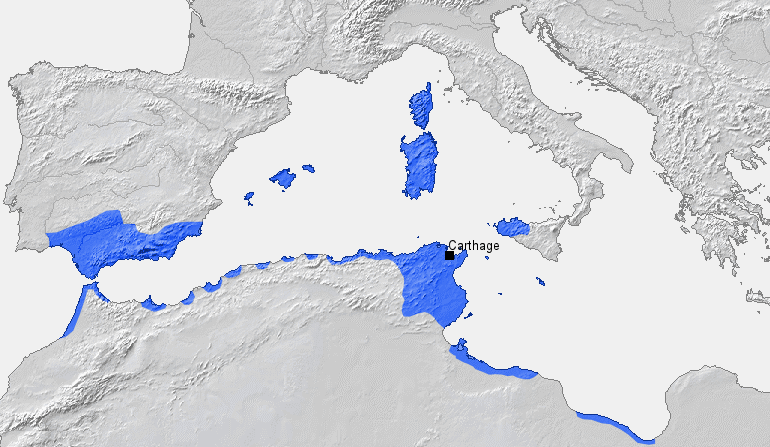
Aristotle, like other Greeks,42 considered the Carthaginian constitution to be “superior to others in many respects”.43 Of the “mixed” type, it was supposed to contain monarchical, aristocratic and democratic elements that balanced one another. It nevertheless deviated towards oligarchy, since magistrates were chosen according to their wealth, not solely their merit. Indeed, it seemed impossible to the Carthaginians that a person “of modest means could have the leisure to hold office under proper conditions”.44
The opposition between Rome and Carthage led to the destruction of the latter by the former in 146 BCE. Rome did not directly inherit the commercial infrastructure of the annihilated city. Nevertheless, Roman Carthage gradually became a major port hub once again, since it retained the geographical advantages of its Punic predecessor. David Stone shows that Africa Proconsularis45 possessed the most developed maritime infrastructure in Roman North Africa, with artificial harbour facilities in twenty cities along roughly 1,900 kilometres of coastline.46 Carthage remained the nerve centre, but the province also possessed dense clusters of export outlets. Stone notably calculates that the Roman period tripled berthing capacity compared with Punic Carthage.
Beyond Carthage, in the Roman Republic and then the Roman Empire, although agriculture remained the main source of revenue, commerce appears to have been structurally important for the following reasons: it supplied the metropolis and the militarised frontier zones; it ensured the transport of taxes, rents and requisitions; it monetised regional specialisations; it generated customs revenue; and it connected the Empire’s distant provinces to routines of government that would have been impossible without regular transport.
Several ancient writings attest to the structuring role played by commerce: the treaty clauses in Polybius, Strabo’s port descriptions, Pliny’s complaints about eastern luxury goods, Gaius’ contractual rules, the maritime actions in the Digest, the lex portorii Asiae, the Muziris papyrus and the Palmyra tariff.47 Archaeologically, the extraordinary number of shipwrecks in the Mediterranean, from the 2nd century BCE to the 4th century CE, indicates a considerable increase in maritime transport compared with earlier periods and with the Middle Ages.48 Which goods, regions and actors participated in this expansion?
Roman commerce rested on overlapping networks rather than on a single market. A first axis, running across the Mediterranean from west to east — Italy, Africa, Spain, the Aegean and the Levant — carried foodstuffs, wine, oil, fish-based products, textiles, marble, metals and manufactured goods. A second began in the Nile valley, passed through the Red Sea ports and extended towards Arabia and India. A third followed land routes or mixed routes — both land and maritime — from Syria and the desert margins towards Mesopotamia and the eastern caravan world. Andrew Wilson emphasises that the state’s interest in transport infrastructure and in the provisioning of Rome accompanied, and often stimulated, wider private exchanges.49
Socially, commerce included negotiators and merchants, shipowners and captains, bankers, brokers, publicani, warehouse-keepers and customs officials. The publicani, known mainly as tax farmers — collecting taxes — negotiated supply contracts for military equipment, construction and mines, through which they could enrich themselves substantially.50 Roman banking, for its part, was not rudimentary: Peter Temin argues that banks and related institutions were widespread at the beginning of the Empire, that the argentarii accepted deposits and granted loans, and that figures such as the Pompeian banker Jucundus handled consignments, payments and credit.51
Rome vs Athens
From the fall of Carthage to that of the Western Roman Empire, Roman commerce was practised within the framework, and under the impetus, of imperialist policy. The transition from Republic to Empire did not alter this hierarchy. Already important under the Republic, commerce was not synonymous with democratisation, but rather with a transformation of power relations, by widening opportunities for private enrichment and the stakes attached to the provinces.
While in 4th-century Athens around 20 per cent of citizens attended the Assembly, in 145 BCE barely more than 1 per cent of their Roman counterparts could travel to do so.52 Rome’s extraordinary expansion from the mid-4th century onwards was not accompanied by a re-examination of the traditional conception of the city-state, in which debates took place in person. Freedom-as-independence remained a primary value of the Republic, which identified itself with the Roman people, but the plebs no longer held anything more than “formal power”.53
Indeed, on the one hand, the institutions theoretically granted the people the power to control legislation, declare wars and appoint the representatives of the state. On the other hand, the elites monopolised wealth, as well as public, military and religious offices. The Senate, which embodied authority founded on past glories,54 dominated the republican political game. The nobility’s contempt for the plebs illustrates the growing gulf between the two classes. It rested on the prejudice that associated poverty with depravity: only the rich had the leisure to develop moral virtues and could exercise free will.55
From a democratic standpoint, the problem lay in the state’s capacity to equalise conditions, to ensure that all citizens had enough leisure to exercise their political judgement. With a higher participation rate, or with the payment for participation in the people’s court introduced by Pericles, Athens took a more democratic direction than Rome. Let us recall that the former was not subject to the same demographic constraints as the latter. Nor did it experience territorial expansion comparable to that of Rome.
The enrichment of the elites, linked to the expansion of commerce, occurred in two different contexts in Greece and the Italian peninsula. In Athens, it took place while political institutions were evolving and hierarchies were not locked in place. The reforms of Solon, Cleisthenes, Ephialtes and Pericles introduced greater equality and broadened political participation, without calling the commercial dynamic into question.
In Rome, the concentration and accumulation of wealth took place against the backdrop of imperialist expansion, within a republic whose institutions had become entrenched and where the nobility had acquired clear political ascendancy. The 2nd-century crisis linked to the grain supply shows that the plebs, despite the existence of tribunes and popular assemblies, did not in practice possess sufficient institutional means to impose its interests durably against those of the nobility. It could therefore often do little more than express its discontent in the streets and exert popular pressure.56 Its role in the transition from Republic to Empire proved negligible compared with the internal struggles of the oligarchy.
From the Tang and Song Dynasties to the Dawn of Modern Revolutions
The Chinese “Commercial Revolution”
The gradual dissolution of the Western Roman imperial order, which had sustained large-scale interregional flows of heavy goods, affected commerce.57 Communications, coastal cabotage, pilgrimages, diplomacy, luxury exchanges and local trade continued, but from the 5th to the 8th century, Mediterranean commerce contracted, became regionalised and lost much of the density it had possessed under Rome. The trend reversed at the beginning of the 9th century: new commercial circuits gradually began to develop again, particularly under the impetus of the Carolingians, but Europe remained fragmented and rural compared with the Roman period.
China, in a manner comparable to Europe, had been unified under the Han dynasty — 207 BCE to 220 CE. However, after a period of fragmentation, its imperial unity was restored by the Sui (581–617) and Tang (618–907) dynasties, then remained the dominant horizon of Chinese political history until the 20th century, despite periods of division, conquest and recomposition.58 Between 750 and 1250, China experienced what historians have described as a “commercial revolution”,59 that is, a set of technical innovations and transformations in agriculture, craft production, industry, transport and modes of exchange that generated economic growth and population increase. The latter rose from 60 million under the Tang to around 100 million in 1100.60
Several agricultural changes favoured this economic dynamic. First, the erosion of large state-owned landed estates during the Tang-Song transition, from which powerful families benefited.61 Then came a fiscal shift: the Song relied more on indirect taxes than on direct taxes on land — Richard von Glahn, drawing on the expression “fiscal state”,62 even describes Song policy as “mercantilist”.63 Next came tenancy contracts through which tenants enjoyed greater freedom, which may have stimulated productivity. Finally, there were technological innovations such as the cast-iron coulter — a vertical blade attached to the plough, used to cut into the soil — improved yokes and, above all, the curved-shaft plough, introduced from northern China into the rice-growing region of the lower Yangzi at the end of the Tang.64
Like the first European Industrial Revolution, which was preceded by major agricultural transformations, the Chinese economic revolution rested first on a significant increase in agricultural productivity, which conditioned population growth and the expansion of economic exchange. Transformations also took place in craft production — textiles, pottery and ceramics — and in industry — mining — which notably made it possible to supplement income from the land.65 They were facilitated by the development of coinage, paper money and state-backed certificates, as well as by the growth of periodic markets, some of which became permanent and contributed to urban expansion.
The rise of market towns accompanied the expansion of commercial nodes. Merchants from the South Seas converged on cities such as Quanzhou, located on the south-eastern coast, where in 1087 the Song government established a maritime trade superintendency responsible for supervising foreign trade.66 Quanzhou thus joined other coastal cities that had been designated, from the 10th century onwards, as seats of maritime trade offices. The imperial government’s recognition of the value of international exchange led to the evolution of what had been a state monopoly into a supervised market.67 This market was stimulated by innovations such as the “south-pointing compass”, already in use by the late 11th century, watertight bulkheads, buoyancy chambers, floating anchors, axial rudders and small rockets propelled by gunpowder.68 The state nevertheless sought to preserve certain monopolies, notably over salt, iron, tea and wine, but also over imported goods of particular value, such as medicines and spices.
The Chinese “commercial revolution” thus shows that a sharp densification of exchange can fuel urbanisation, monetisation and fiscal power without necessarily leading to restricted political equality of a republican type: integrated into the imperial framework and supervised by the administration, it above all strengthened the bureaucratic state rather than autonomous merchant counter-powers.
The Italian Cities: Matrices of Restricted Civic Equality
The Italian cities of the late Middle Ages and the Renaissance illustrate a different dynamic, one that, from the 12th century onwards, stood apart from European monarchical and imperial tendencies.69 They often experienced republican and oligarchic forms, typically composed of a podestà, a general council and a restricted council. Their political autonomy was not born of popular equality, but of an urban power capable of partially freeing itself from the feudal and imperial order. They formed part of the Mediterranean pole of a European world-economy: a pole that imported luxury goods from the Near East, produced textiles, glass, metalwork and pottery, exported to northern Europe and the Near East, and saw the establishment of banks. The latter made exchange more fluid and helped bring borrowing into common practice.
Within the Italian cities, where the different orders and classes lived side by side, the social hierarchy was transformed. Value no longer rested solely on birth or martial exploits: it could derive from education, civic virtue, but also from wealth, perceived as a resource for the family and the state, and as a condition for the exercise of virtue. The civic legitimisation of wealth was accompanied by a change in attitudes towards merchants, traditionally depreciated, as well as towards work: merchants, through their ceaseless labour, contributed to the prosperity and health of the republic.
If wealth, credit, prudence, work and reputation became politically acceptable qualities, equalisation remained limited: peasants, workers and the poor remained largely excluded from this civic dignity. The recognition granted to wealth, and to commerce in particular, instead consolidated an equality among families, merchants, bankers, notables and sometimes nobles who had moved into business. Renaissance Italy shows that commerce could crack the noble order without producing extensive equality. It altered the criteria of social distinction: wealth, education and urban integration partly replaced birth and bravery.
The Political Weight of Merchants in the United Provinces and England in the 17th and 18th Centuries
In the 16th century, the Western horizon was no longer limited to the edges of Europe and the Mediterranean basin; it extended to Africa, Asia and the Americas. By consolidating a centralised state and exploiting American precious metals, the Spanish monarchy launched a European competition without geographical limits or any real ethical limits.70
The United Provinces challenged and partly displaced this domination in the 17th century by adopting a distinct politico-economic model: this aristocratically dominated republic of states drew its power from a colonial system organised around two companies — the Dutch East India Company (VOC) and the Dutch West India Company (WIC). Closely linked to the state, the VOC and the WIC were granted a regional monopoly and quasi-sovereign prerogatives, such as the right to wage war, conclude peace, administer justice and mint coinage. Financial institutions such as the Wisselbank and the Amsterdam Stock Exchange underpinned this commercial and military power.
A society such as that of the United Provinces, where “the merchant is king”, does not mean that the people are sovereign. Rather, it means that the merchant interest can rise to the level of reason of state. Free trade becomes an institutionally protected freedom, but it remains the freedom of the groups capable of benefiting from it: regents, merchants, shipowners, creditors, companies and cities.
In 17th- and 18th-century England, merchant and manufacturing interests allied with landed property to participate actively in the functioning of a parliamentary monarchy that was more open than previous regimes, but in which equality remained restricted:71 royal power was more limited, taxation and the army required parliamentary consent, and elections became regular, but this counter-power remained mediated by a male, propertied and property-qualified oligarchy.
After the Glorious Revolution of 1688, this restriction of political equality became even more closely tied to the financial power of the state. The monarchy did not disappear, but it could no longer govern durably against the interests represented in Parliament. Consent to taxation, the consolidation of public debt, the creation of the Bank of England in 1694 and the development of a fiscal-military state gave landowners, creditors, merchants and manufacturers increased political weight. Public trust then rested on a form of parliamentary control: the state could borrow because the groups capable of guaranteeing repayment themselves participated in the authorisation of taxes. The equality that was strengthened was therefore not democratic in the modern sense; it mainly concerned propertied men — voters, taxpayers or creditors — whose interests were integrated into the naval, commercial and imperial power of the kingdom. England thus illustrates a decisive form of restricted equality: royal power was limited, but to the benefit of a social coalition capable of financing the state, war and commercial expansion.
If, from the 16th to the 18th century, Western globalisation and state-building favoured the promotion of economic interests, political openness was confined to those interests that made it possible to finance the power of the state. It was in this context that the grammar of interests took precedence over that of virtues.72
Colonial Virginia: An Equality of Circumstance
Let us end our historical excursion in America. The first lasting English colony in North America was established at Jamestown in 1607, as part of an expedition coordinated by the Virginia Company of London, a chartered trading company supported by King James I.73 Granted the power to govern the community of colonists as it saw fit, the company instituted a restricted council whose members it chose.74 In other words, it had no intention of introducing forms of political participation. It hoped that the exploitation of the supposedly abundant natural wealth of the New World, through the labour supplied by the colonists, would generate prosperity and honour for Virginia, as well as comfortable returns on investment.75
Nevertheless, bitter reality followed the initial hopes: epidemics and famines decimated the first arrivals and threatened the survival of the enterprise, which, until the mid-1620s, proved a financial disaster:76 the search for precious metals yielded nothing, and shipments of a range of goods — glass, pitch, tar, potash, clapboards, sassafras and iron — failed to cover the costs of the colony. Precariousness led to disorder, which was at first severely repressed.77
Tobacco, supported by an expanding European market and by the land available in Virginia, offered an economic solution to these disappointments. In addition, in 1619, Edwyn Sandys, a supporter of mutual rights between king and people, became the new treasurer of the Virginia Company. Faced with a shortage of volunteers willing to emigrate, he improved the conditions of the colonists by granting land and political rights. Land was distributed to settlers who had been present for some time, or promised to potential settlers after they had cultivated land held by the company. Politically, he contributed to the establishment of elected assemblies that decided the most important questions, while day-to-day affairs remained the prerogative of the governor and the council.78
The participation of free men, and of some servants, in local decision-making facilitated adherence: it made colonial government more acceptable and more effective. It also encouraged immigration. It arose from the encounter between Sandys’ egalitarian convictions and the company’s need to cooperate with the pioneers. This dependence on the goodwill of the colonists was not limited to Virginia: David Stasavage also observes it in other English colonies in America, such as Massachusetts and Maryland, without this erasing the specificity of the Virginian case.79
In the second half of the 17th century, demand for immigrant labour fell as life expectancy increased and commercial restrictions were introduced. A new political coalition, composed of planters who owned the largest estates and former servants who had become landowners, then campaigned to withdraw the right to vote from servants. The influx of African slaves gave rise to a new coalition of small and medium-sized slaveholding farmers in favour of a greater restriction of suffrage. The right to vote was then withdrawn from non-landowners.80
The political equality that began to take shape was therefore real but strictly bounded. It concerned free European men, especially those who gradually joined the group of settled colonists, whether landowners or aspiring to become so. It excluded women, indentured servants during their period of dependency, enslaved Africans, and Indigenous populations, who were pushed back, dominated or dispossessed.
A Conditional Causality
The various historical, political and economic configurations reviewed here show that commerce, from Antiquity to the dawn of modern revolutions, does not naturally lead to political equality. We need to observe the framework into which it fits: city, empire, bureaucracy, war, colony, fiscal state, landed structure, coercive capacity. The way in which commerce interacts with equality appears to depend on four comparative variables:
- the form of government and the ideals that support it;
- the age, stability and degree of openness of the social hierarchy;
- the relationship between commerce, war and taxation;
- the balance of power between social groups.
The earliest historical examples, in the Near East and ancient Egypt, show that commerce was embedded in ancestral political traditions supported by religion. They do not allow us to extrapolate any influence of commerce on equality. Ancient Rome and Tang-Song China in turn illustrate that commerce could play an important political role while remaining subject to the demands — especially fiscal and military — of a nobility or an imperial bureaucracy. In these configurations, it did not produce a real counter-power capable of generating political equality.
Athens offers a different perspective: commerce initially operated as a factor of social dislocation before being integrated into an egalitarian political order. Democratisation here depended on the context of a small city, social conflicts, political reforms, broader military participation, the valorisation of justice and the primacy of politics. In the service of democracy, commerce combined effectively with it and fostered prosperity, especially in the 4th century.
In Antiquity, commerce does not seem to have fundamentally called existing political structures or the social order into question. For that to happen, we must wait until late medieval and Renaissance Italy, where merchants carved out a path towards political governance and social recognition, overturning the scale of values that placed birth and bravery at the summit. A similar dynamic occurred in the United Provinces and then in 17th- and 18th-century England. It was in the latter that political opening was greatest: Parliament limited the monarchy to the benefit of a coalition of landowners, creditors, merchants and manufacturers, while helping to finance a fiscal-military state. Nevertheless, in all three cases, equalisation was restricted to merchant, urban and propertied groups that managed to enter the political game and, to some extent, impose their interests.
Virginia, for its part, belongs neither to the Roman imperial model, nor to the Chinese bureaucratic model, nor to the English parliamentary model. Political equality there took the form of a pragmatic concession linked to the Virginia Company’s coercive weakness, the need to attract settlers and the availability of land. But this opening closed again when the social coalition changed, notably with the rise of property ownership, slavery and the exclusion of non-landowners.
These different historical examples allow us to draw out a few guiding lines:
- Commerce can symbolically equalise certain statuses: it makes wealth, credit, calculation or mercantile labour politically acceptable.
- Commerce can create counter-powers, but only when economic actors possess institutions, cities, assemblies, rights, capital or fiscal capacities that enable them to negotiate with power.
- Commerce almost never equalises the entire social body. Women, slaves, the poor, peasants, servants, colonised or Indigenous populations generally remain excluded. The equality produced is civic, male, propertied, urban, colonial or fiscal — and therefore restricted.
Commerce therefore does not seem to produce equality by itself. It fosters restricted equality when it weakens old hierarchies, gives resources to groups capable of political negotiation, and is embedded in institutions that transform wealth into counter-power. But it can just as easily nourish empires, bureaucracies, oligarchies or slave systems. It therefore does not carry an intrinsic democratic dynamic. Rather, it redistributes the bases of social power, sometimes in favour of limited political opening, rarely in favour of general equality.
Notes
1 The elements of this opening paragraph are developed in the first part of the article.
2 https://damiengimenez.fr/wpdgi_article_en/when-the-economy-becomes-a-value-the-turning-point-of-the-italian-renaissance/
3 Aristote, Les politiques, 1179b et 1292b.
4 Jeffrey Winters, in Oligarchy, Cambridge University Press, 2011, emphasises the withdrawal of oligarchs from political power in what he calls “civil oligarchies”, something that has become debatable since Donald Trump.
5 As illustrated, for example, by the relationship between Elon Musk and Donald Trump.
6 Jean L. Cohen, “Cycles of Oligarchy, Democracy and Authoritarianism: Lessons from the U.S.”, Constellations, vol. 32, 2025, 212-231, https://doi.org/10.1111/1467-8675.12769; Jeffrey A. Winters, Oligarchy, Cambridge University Press, 2011.
7 Yves Schemeil, “Democracy before Democracy?”, International Political Science Review, vol. 21, 2000, 99-120; John Keane, The Life and Death of Democracy, Simon & Schuster UK Ltd, 2009; David Stasavage, The Decline and Rise of Democracy, Princeton University Press, 2020.
8 John Keane, op. cit.
9 David Stasavage, op. cit., defines “early democracy” as a “system in which a ruler governed jointly with a council or assembly composed of members of society who were themselves independent from the ruler and not subject to his or her whim.”
10 Yves Schemeil, op. cit., draws on Robert Dahl, Democracy and its Critics, Yale University Press, 1989, to put forward the expression “political dream”.
11 Martin Bernal, Black Athena: The Afro-Asiatic Roots of Classical Civilization, Free Association Books, 1987 ; John Keane, op. cit.
12 Joshua J. Mark, « Trade in Ancient Mesopotamia: How Commerce Encouraged Civilization », World History Encyclopedia, 05 Feb 2026, https://www.worldhistory.org/article/2114/trade-in-ancient-mesopotamia/.
13 Michael Jursa & Juan Carlos Moreno García, “The Ancient Near East and Egypt: fiscal regimes, political structures”, Fiscal Regimes and the Political Economy of Premodern States, Cambridge University Press, p. 115-165.
14 Ralph K. Pedersen, On Sea and Ocean: New Research in Phoenician Seafaring, Proceedings of the Symposion Held in Marburg, June 23–25, 2011 at Archäologisches Seminar, Philipps-Universität Marburg.
15 Ibid.
16 Josiah Ober, The rise and fall of classical Greece, Princeton University Press, 2015, p. 73.
17 Anthony Snodgrass, Archaic Greece. the Age of Experiment, University of California Press, 1982, p. 19.
18 Ibid., p. 36-40.
19 Ibid., p. 51.
20 Ibid. p. 55.
21 Ibid., p. 79-82.
22 Christian Meier, La naissance du politique, Gallimard, 2014.
23 Ibid.
24 The classic hypothesis that the hoplite phalanx favoured equalisation — Marcel Detienne, “La phalange : problèmes et controverses”, in Jean-Pierre Vernant (ed.), Problèmes de la guerre en Grèce ancienne, Éditions de l’EHESS, 1968 — has been challenged by Anthony Snodgrass, op. cit., p. 107, and by Christian Meier, op. cit.
25 Moses I. Finley, Ancient Economy, University of California Press, 1973, p. 95.
26 Josiah Ober, Democracy and Knowledge: Innovation and Learning in Classical Athens, Princeton University Press, 2008.
27 Herodotus, Histories 7.144, trans. A. D. Godley, Loeb Classical Library, vol. 3, 1922, LacusCurtius.
28 William Morison, “Regional Study: Athens in the Fifth Century Bce” in Craig Benjamin (ed.), The Cambridge World History, Cambridge University Press, 2015, p. 350–374.
29 Edward E. Cohen, Ancient Athenian Maritime Courts, Princeton University Press, 1973.
30 For the tragedies, see in particular Aeschylus’ Eumenides, of which Christian Meier, op. cit., provides a detailed interpretation.
31 Werner Jaeger, « Éloge de la loi. L’origine de la philosophie légale et les Grecs », Lettres d’humanité, vol. 8, 1949, 5-42.
32 Mogens Herman Hansen, The Athenian Democracy in the Age of Demosthenes, Blackwell, 1991, p. 70.
33 Aristotle, Politics, 1287a, in Œuvres complètes, Flammarion, 2014: “to desire the rule of law is, it seems, to desire the rule of god and reason alone; but to desire the rule of a man is to add that of a wild beast.”
34 Rosalind Thomas, “Writing, Law, and Written Law » in Michael Gagarin and David Cohen (ed.), The Cambridge Companion to Ancient Greek Law, Cambridge University Press, 2005.
35 Jacqueline de Romilly, La loi dans la pensée grecque, Les Belles Lettres, 2002, chapitre V.
36 Mogens Herman Hansen, op.cit., p. 180.
37 Démosthène, Contre Midias inJacqueline de Romilly, op. cit., p. 145.
38 Ibid., p. 148.
39 Maurice Sznycer, « Carthage et la civilisation punique », dans Claude Nicolet (dir.), Rome et la conquête du monde méditerranéen, t. 2 : Genèse d’un empire, Paris, Presses universitaires de France, 1978, p. 545–593.
40 A term preferred by contemporary historians to that of empire: https://fr.wikipedia.org/wiki/Civilisation_carthaginoise#Expansion_en_M%C3%A9diterran%C3%A9e_et_en_Afrique
41 Mark Cartwright, « Carthaginian Trade. » World History Encyclopedia, 17 Jun 2016, https://www.worldhistory.org/article/911/carthaginian-trade/.
42 Ératosthène, Polybe ou Isocrate : Maurice Sznycer, op. cit.
43 Aristote, Les Politiques, 1272b in Oeuvres complètes, op. cit.
44 Ibid., 1273a.
45 https://fr.wikipedia.org/wiki/Province_d%27Afrique
46 David L. Stone, “Africa in the Roman Empire: Connectivity, the Economy, and Artificial Port Structures”, American Journal of Archaeology, 118, 4, 2014, 565–600.
47 Dorathea Rhode, “Roman Port Societies and Their Collegia: Differences and Similarities between the Associations of Ostia and Ephesos” in Pascal Arnaud and Simon Keay (ed.), Roman Port Societies: The Evidence of Inscriptions, Cambridge University Press, 2020; Frederico de Romanis, The Indo-Roman Pepper Trade and the Muziris Papyrus, Oxford University Press, 2020 ; J. Ogereau, “Customs Law of the Roman Province of Asia (ex portorii Asiae)” in S. R. Llewelyn and J. R. Harrison (ed.), A Review of the Greek and Other Inscriptions and Papyri Published between 1988 and 1992, Macquarie University, 2012; Marta Żuchowska, “Palmyra and the Far Eastern trade” in Grzegorz Majcherek (ed.), Studia Palmyreńskie XII, University of Warsaw, 2013.
48 Neville Morley, “The Early Roman Empire: Distribution” in Walter Sheidel, Ian Morris and Richard P. Saller (ed.), The Cambridge Economic History of the Greco-Roman World, Cambridge University Press, 2007.
49 Andrew Wilson, “Trade in the Roman Empire” in Jeremy Tanner and Andrew Gardner (ed.), Materialising the Roman Empire, UCL Press, 2024.
50 Ernst Badian, Publicans and Sinners, Cornell University Press, 1972.
51 Peter Temin, “The Economy of the Early Roman Empire”, Journal of Economic Perspectives, vol. 20, n°1, 2006, p. 133-151.
52 Henrik Mouritsen, Plebs and Politics in the Late Roman Republic, Cambridge University Press, 2004, p. 32.
53 Ibid., p. 32-36.
54 Clément Bur, “Auctoritas et mos maiorum”. in L’auctoritas à Rome, Jean-Michel David and Frédéric Hurlet (dir.), Ausonius Éditions, 2020. https://books.openedition.org/ausonius/16896
55 Henrik Mouritsen, op. cit., p. 139.
56 Ibid., p. 146
57 Michael McCormick, Origins of the European Economy: Communication and Commerce AD 300 ‒ 900, Cambridge University Press, 2010 ; Chris Wickham, “The Mediterranean around 800: On the Brink of the Second Trade Cycle”, Dumbarton Oaks Papers 58, 2004, p. 161-174.
58 Linda Walton, Middle Imperial China, 900 ‒ 1350, Cambridge University Press, 2023, p. 5.
59 Ibid., p. 6.
60 Ibid., p. 91.
61 Ibid., p. 94.
62 See in particular John Brewer’s now classic study, The Sinews of Power: War, Money and the English State, 1688–1783, Harvard University Press, 1990.
63 Linda Walton, op. cit., p. 92-93.
64 Ibid., p. 95.
65 Ibid., p. 99.
66 Ibid., p. 111.
67 Ibid., p. 112.
68 Ibid., p. 115.
69 https://damiengimenez.fr/wpdgi_article_en/when-the-economy-becomes-a-value-the-turning-point-of-the-italian-renaissance/
70 https://damiengimenez.fr/wpdgi_article_en/the-age-of-extractive-and-commercial-empires-spain-and-the-dutch-republic-16th-17th-century/
71 https://damiengimenez.fr/wpdgi_article_en/wealth-as-a-political-principle-england-17th-18th-centuries/; https://damiengimenez.fr/wpdgi_article_en/interests-as-the-driving-forces-of-social-recomposition-in-eighteenth-century-great-britain/
72 https://damiengimenez.fr/wpdgi_article_en/how-interests-and-values-rose-and-virtue-declined-16th-18th-centuries/
73 https://en.wikipedia.org/wiki/English_overseas_possessions#The_first_English_overseas_colonies ; https://en.wikipedia.org/wiki/Colony_of_Virginia
74 David Stasavage, op. cit.
75 James Horn, “Tobacco Colonies: The Shaping of English Society in the Seventeenth-Century Chesapeake”, The Oxford History of the British Empire, volume I: The Origins of Empire, Oxford University Press, 2001.
76 Ibid.
77 David Stasavage, op. cit.
78 Ibid.
79 Ibid.
80 Elena Nikolova et Milena Nikolova, “Suffrage, labour markets and coalitions in colonial Virginia”, European Journal of Political Economy, Volume 49, 2017, p. 108-122.